

Fall and Early Winter Garden Management
Winterize, Remove, and Let Rest
Be sure to winterize your backflow preventer and turn off your irrigation water. Watering can resume in mid – late May
Autumn
is a great time to pull weeds and remove unwanted plants from the garden, such as volunteering invasive trees like Siberian Elm (Ulmus pumila), Russian Olive (Elaeagnus angustifolia) and Tree of Heaven (Ailanthus altissima). Knowing and identifying these weed trees prior to their establishment in your garden is key to keeping things tidy and intentional looking. Trying to remove any one of these volunteer trees is incredibly challenging after just a few months of growing as they establish deep roots very quickly.
One might ask,
“Why remove a tree that grows so quickly and does not require a lot of water? We could use more trees in Utah to provide shade in summer”. While these volunteer trees are rapid growers, they tend to have brittle branches that break and cause damage, reseed aggressively, and are oftentimes sprouting between fences, against foundations or in otherwise unacceptable and dangerous locations like below power lines.
Tree of Heaven
(Ailanthus altissima) is the most concerning of the common invasive tree species here in urban Utah. It is the quickest growing and literally kills plants around it in an effort to colonize an area. It can quickly grow to 60’ tall and 40’ wide in the matter of a decade in just about any urban setting. An individual tree can produce 300,000 seeds annually. The tree can also spread by root suckers as far as 50 feet away from the parent tree. Tree of Heaven is allelopathic meaning that it releases chemicals from its roots that inhibit and prevent the growth of other plants around it. In some cases, the tree can kill and weaken the wood of larger mature trees posing a risk of property damage and lost diversity of mature trees in our urban setting. This tree is the host plant for another invasive species, Spotted Lantern Fly which oftentimes kills native trees like maples, walnuts and agricultural crops.
Identifying
the tree is the first step to containing its aggressive spread. The leaves look similar to Staghorn Sumac and Black Walnut except the native trees have serrations along the leaf, not smooth edges like the Tree of Heaven.

(Above) – A young seedling – pull immediately
(Below) – A 1 – 2 year old tree of heaven growing in an unmanaged garden bed beside a building and sidewalk.

Tree of Heaven
is most easily controlled in the seedling stage by pulling the weed before it produces mature leaves and a woody stem. After just a few months of growing, the tree will need repeated applications of glyphosate sprayed on the cut stump to eradicate it. Also, try digging the trunk and roots of the tree out. In some cases, a stump grinder may be necessary. Applying poison in fall is the most effective. Pulling the weeds while the soil is wet and soft (like this autumn) will ensure you’re able to remove the entire root and seedling.
Along with the help of your neighbors,
try to remove and stop this invasive species from ruining your landscape. If you can see a this tree from your yard, it is soon to reseed into your yard too. Contact your arborist to remove large individuals and have them poison the tree until it is is totally dead.
On a more relaxing note,
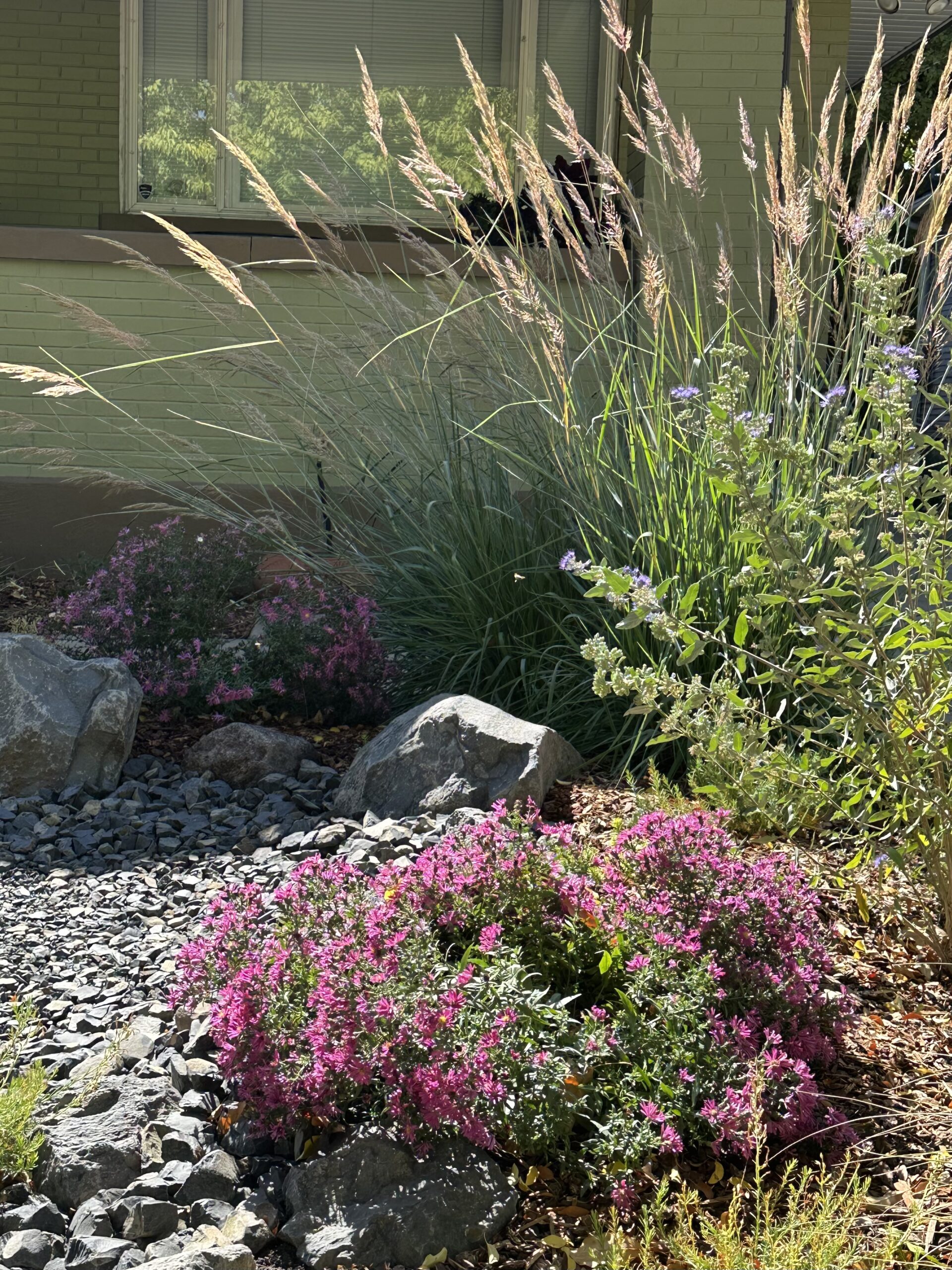
late fall and winter is a wonderful time of year to find beauty in your 4-season garden. We like to leave certain flowers, shrubs and ornamental grasses unpruned until springtime to offer seasonal color, structure, food and nesting material for songbirds and other wildlife. Recommended late fall and winter maintenance for homeowners is limited to snow removal and leaf blowing patios and gravel to remain clean and reduce staining from detritus. Blowing leaves into mulched garden beds is sufficient for keeping a tidy winter landscape with ecology and beneficial insects in mind. Ornamental grasses, yarrow, goldenrod, rabbitbrush, and other plants capture glistening frost and dustings of snow beautifully.
What are some of your favorite fall and winter interest plants?

(Above) – A ‘gro-low’ sumac showing intense fall color in our designer’s garden